

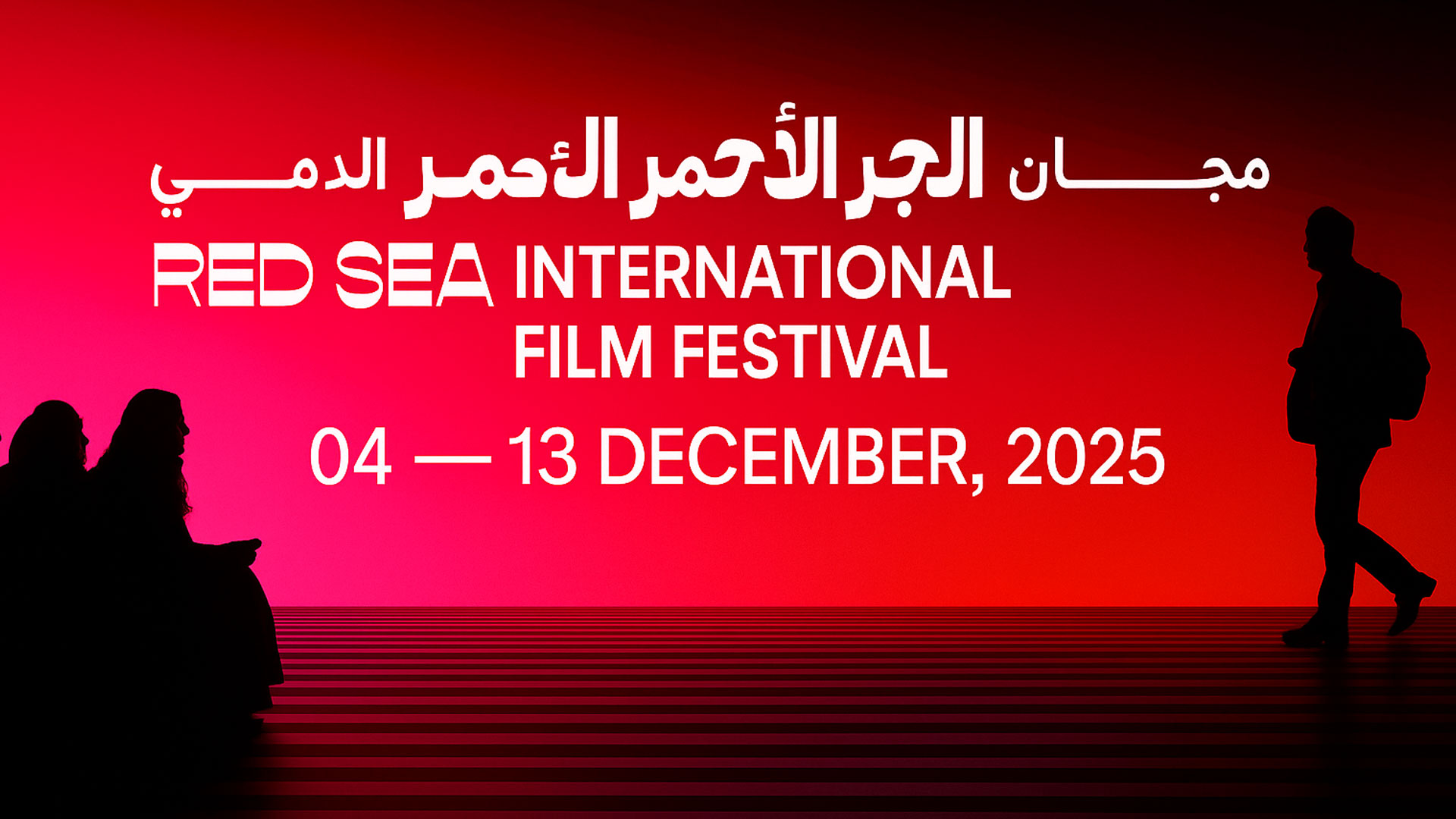
In just a few editions, the Red Sea International Film Festival in Jeddah has evolved from a bold Saudi experiment into one of the most closely watched events on the global festival calendar. Its 2025 edition, held in the historic Al-Balad district from 4 to 13 December, has turned the Red Sea coast into a meeting point for Hollywood icons, Arab auteurs and, increasingly, Lebanese talent across film, fashion and the red carpet.
Set against a UNESCO World Heritage backdrop, the festival blends heritage with modern cinema. Open-air screenings, waterfront venues and restored historic buildings give the event a distinctive atmosphere: part glamorous red carpet, part cultural laboratory for a rapidly changing Saudi and regional film scene — one in which Lebanese voices are highly visible.
Lebanese films in the Levant spotlight
On the programming side, the 2025 edition gives prominent space to the Levant, with a dedicated slate of films from Palestine, Jordan and Lebanon. Lebanese cinema is represented by five key titles: “Jeem 1983” by Jorj Abou Mhaya, “A Sad and Beautiful World” by Cyril Aris, “What If They Bomb Here Tonight?” by Samir Syriani, “The Finale” by Rodolphe Chedid and “She’s Swimming” by Liliane Rahal.
Each film brings a different angle on Lebanese reality. “Jeem 1983” revisits war-torn Beirut through the eyes of a child whose imagination becomes a form of resistance. “A Sad and Beautiful World”, a Lebanese–European–Gulf co-production, follows two characters bound together by a massacre in Beirut and explores love, memory and the desire to escape. “What If They Bomb Here Tonight?” stages one night in the life of a couple deciding whether to flee their glass-walled home under the threat of airstrikes. “The Finale” turns to an ageing couple in a Lebanese village writing their life story, while “She’s Swimming” uses impressionistic visuals to process grief after a tragic plane crash.
Lebanese names on the Red Sea 2025 map
Beyond the films themselves, the festival confirms a growing cluster of Lebanese names active across competitions, juries and red carpets:
- Cyril Aris – Lebanese director of “A Sad and Beautiful World”, a drama co-produced by Lebanon, the US, Germany, Saudi Arabia and Qatar and highlighted by regional media as one of the key titles to watch at Red Sea 2025.
- Jorj Abou Mhaya – director of “Jeem 1983”, set in Beirut in 1983 and centered on a child navigating the civil war, part of the Levant slate announced by the festival.
- Samir Syriani – Lebanese director of “What If They Bomb Here Tonight?”, a 17-minute short about a couple living under the fear of airstrikes, featured in the Red Sea shorts competition and profiled by Arab News for capturing the “invisible scars” of war. Syriani also appeared on the festival’s closing-night red carpet.
- Rodolphe Chedid – director of “The Finale”, a Lebanese feature about memory, ageing and the legacy of war, included in the Levant showcase.
- Liliane Rahal – Lebanese filmmaker behind “She’s Swimming”, a personal documentary-style work on grief and loss also in the Arabic shorts line-up.
- Georges Khabbaz – renowned Lebanese actor, starring as Munir in “Yunan”, a film by Ameer Fakher Eldin that appears in the festival’s wider program and further extends Lebanese on-screen presence in Jeddah.
Nadine Labaki, Razane Jammal & Carmen Bsaibes: Lebanese faces on juries and galas
Lebanese influence at Red Sea 2025 is not limited to screenings. On the institutional and red-carpet side, several high-profile Lebanese women play central roles.
At the Women in Cinema Gala, held in partnership with Kering and EDITION Hotels at the Jeddah Yacht Club, Lebanese actress and director Nadine Labaki serves on the features jury headed by filmmaker Sean Baker. Labaki, whose film “Capernaum” became the highest-grossing Arabic-language film in history, participates in conversations about how cinema can address social issues and represent the region on the world stage.
The gala itself is hosted by Razane Jammal, the Lebanese actress known for her work in regional and international series. She appears as both host and Women in Cinema Ambassador, with Getty and social coverage showing her at the opening ceremony and gala events, where she helps frame the evening as a celebration of women across Arab, African and Asian cinema.
Elsewhere in the programme, Lebanese actress and director Carmen Bsaibes joins the jury for the festival’s 48-Hour Film Challenge, judging emerging filmmakers alongside Saudi and French-Moroccan colleagues. Her presence underlines how Lebanese professionals are being woven into the festival’s talent-development ecosystem, not just its red carpets.
Adding to this, social and industry coverage from the festival highlights Lebanese actor Josef Akiki among Arab talents present at Red Sea awards and events, further evidencing the country’s growing representation among the next wave of regional performers.
Lebanese couture on the Jeddah red carpet
As with many major festivals, fashion is part of the narrative — and Lebanese designers continue to dominate. At Red Sea 2025, regional media spotlight Lebanese couturier Nicola Jebran, whose beaded, tulle-skirt gown for Saudi actress Aseel Omran at the opening ceremony becomes one of the evening’s most-shared looks.
The festival also reinforces the global status of Lebanese couture houses such as Elie Saab, whose signature red-carpet language — intricate embroidery, dramatic silhouettes, and a blend of Middle Eastern opulence with modern lines — remains a visual reference point for stars and stylists in Jeddah and beyond. Coverage around Red Sea’s gala events repeatedly connects the rise of regional festivals with the continued prominence of Beirut’s designers on the world stage.
A regional hub where Lebanese cinema still matters
For Lebanese filmmakers and artists, the Red Sea International Film Festival arrives at a delicate time. While Lebanon confronts economic crisis and political paralysis, its creative community is seeking new platforms, new partners and new audiences. Jeddah’s festival offers all three: a regional hub with international press visibility, a strong industry market and an explicitly Arab-centred programming philosophy.
From the Levant slate to shorts competitions, from women-in-cinema initiatives to talent labs and juries, Lebanese names keep appearing across the 2025 edition. Directors like Cyril Aris and Samir Syriani bring new narratives; actors such as Georges Khabbaz and Josef Akiki carry Lebanese stories on screen; figures like Nadine Labaki, Razane Jammal and Carmen Bsaibes shape the festival’s conversations and mentoring spaces; designers including Elie Saab and Nicola Jebran continue to define how the region dresses for the camera.
For audiences in Lebanon, this matters. It means that even when Beirut’s own infrastructure is under strain, Lebanese culture is still present where global cinema gathers. For Jeddah and the wider Gulf, it means the Red Sea festival is not only importing stars, but building a shared Arab film space in which Lebanese talent remains central to the story.
Nowleb Special – Red Sea International Film Festival 2025, with a detailed spotlight on Lebanese films, artists and designers.
Leave a Reply