

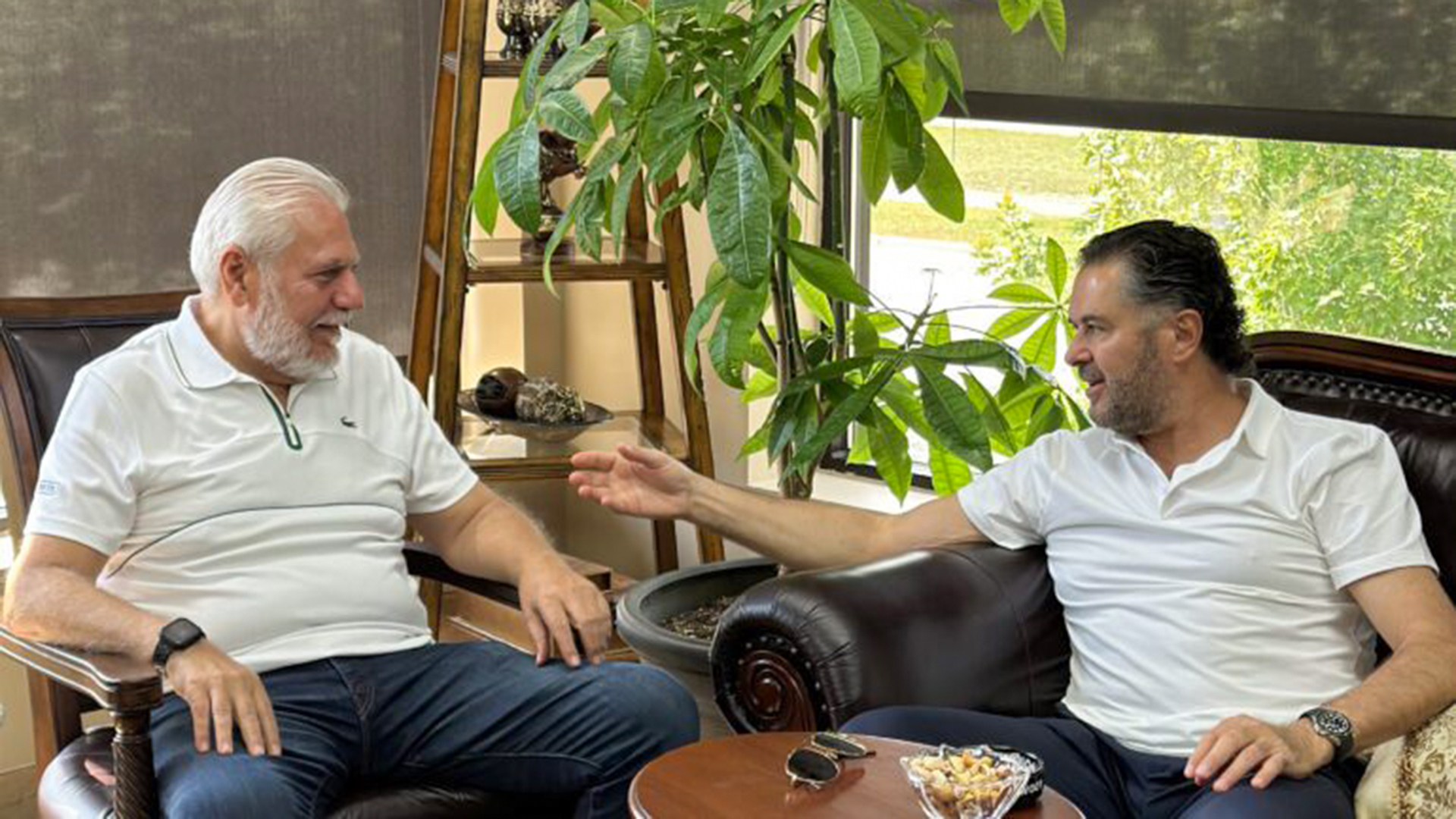
In Dearborn, Michigan, a packed hall of Arab Americans recently turned a casino showroom into something closer to a Beirut concert night. As part of his U.S. tour, Lebanese superstar Ragheb Alama delivered what many in Detroit described as a “night of a lifetime,” then sat down with The Arab American News to talk honestly about music, diaspora success and Lebanon’s deep economic quagmire.
The sold-out Detroit show followed another major concert in Washington, D.C., with more stops scheduled in Miami, Houston, Los Angeles and New York. For Alama, the tour is not only about performing hits from a four-decade career – it is also about reconnecting with communities that still insist on singing in Arabic, even as their daily lives unfold in English.
In the interview, Alama described his relationship with the Arab American public as “special,” shaped by years of touring and a shared determination to keep Arabic music alive far from home. He noted how parents in the U.S. pass songs and dialects to children who may have never lived in Lebanon, reading this as proof that exile has not erased cultural roots.
At the same time, he pushed back against the idea that Arab music is in decline. For him, the art has simply followed technology – from cassette tapes to CDs to smartphones and streaming. What has changed, he argued, is how quickly tastes shift in a world of algorithms and social media. His own recent releases, including the upbeat single “Yalla,” are part of an effort to stay inside that evolution rather than be left behind.
Alama reserved his strongest language for Lebanon’s political and economic collapse. He insisted he is not a politician, but a father who wants safety and dignity for his children and fans. From that position, he said, he cannot stay silent while a corrupt ruling class “feeds” off the country and forces young Lebanese to emigrate. He rejected the narrative that voters are to blame for repeatedly electing the same leaders, calling the elections deeply flawed and unrepresentative of the silent majority.
He also attacked sectarianism, describing it as the force that has destroyed Lebanon’s prospects and displaced its youth. While rumours occasionally link him to specific political figures, Alama said he no longer maintains friendships with Lebanon’s current leaders, making a point of separating his art – and his conscience – from a political class he sees as responsible for the country’s ruin.
Despite that anger, his tone shifted when he spoke about Lebanese people themselves. Alama praised their creativity, education and ability to succeed “wherever they go,” pointing to Arab American professionals, entrepreneurs and officials in Michigan and beyond as proof that Lebanon’s human capital remains extraordinary, even if the state fails them.
For the Arab American audience that filled the Detroit hall, the evening was more than nostalgia. It was a reminder that the soundtrack of their youth still belongs to a singer who refuses to separate love songs from social reality. On stage, he stretched the set by an extra half hour simply because he did not want to cut short the joy in the room. Off stage, he used his platform to say what many of his fans already believe: that Lebanon deserves leaders worthy of its people.
Leave a Reply