

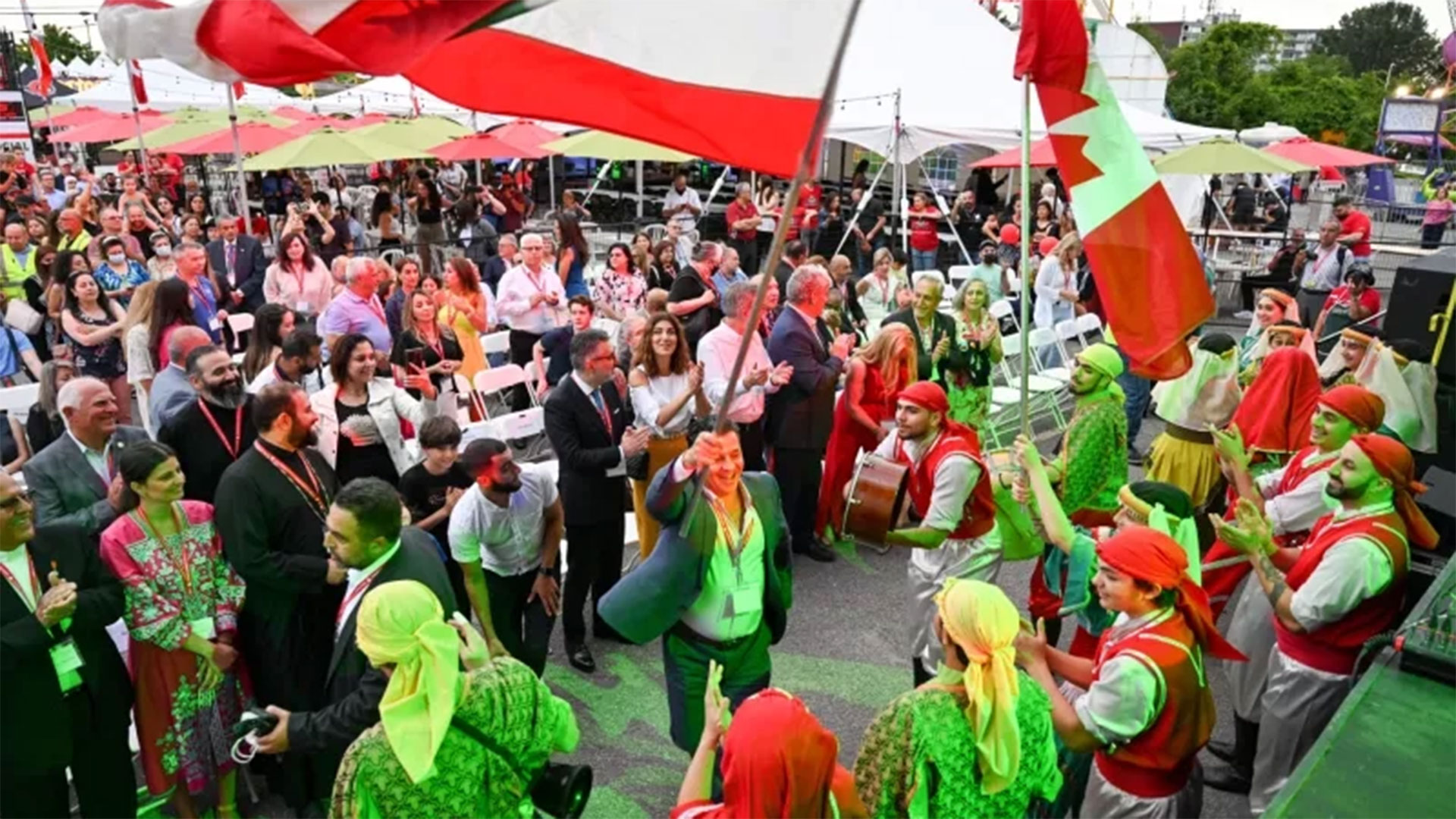
Every July, a corner of Ottawa transforms into a piece of Lebanon. For five days, the grounds of St. Elias Cathedral fill with the smells of grilling meat, the sound of dabke music and the chatter of families catching up over trays of mezze. The Ottawa Lebanese Festival has grown from a small community gathering into one of the city’s most anticipated summer events, drawing thousands of visitors from across the region.
Hosted on the grounds of St. Elias Antiochian Orthodox Cathedral, the festival is rooted in a community that has helped shape the city for generations. Lebanese immigrants began organising around the church decades ago, and as Ottawa’s Lebanese population grew, so did the ambition of the festival. Today, it is a showcase for the community’s food, hospitality and cultural pride, open to anyone curious enough to step inside the gates.
The main attraction, unsurprisingly, is the food. Long lines form in front of grills and booths serving shawarma, kebabs, kafta, tabbouleh, hummus, falafel and freshly baked manakish. Volunteers churn out thousands of portions over the festival’s run, while dessert tables offer baklava, knefeh and other sweets that rarely taste this good outside a Lebanese home. Many recipes come straight from family kitchens, passed down over decades.
But the festival is as much about sound as taste. A rotating programme of live entertainment brings together traditional dabke troupes, singers, DJs and children’s performances. On warm evenings, the area in front of the stage turns into an impromptu dance floor, with circles of dancers linking arms to stomp out familiar steps. For many second- and third-generation Lebanese Canadians, this is where they learn – or relearn – the moves their parents grew up with.
Alongside food and music, the festival includes games and rides for children, souvenir stalls, cultural displays and community outreach stands. It has become a place where local businesses, student groups and charities connect with visitors, and where newcomers to Ottawa can discover a network they did not know existed. For non-Lebanese guests, it offers a friendly introduction to a culture that is deeply woven into the city yet still misunderstood.
Organisers describe the event as a way of giving back to Ottawa while keeping a connection to Lebanon alive, especially in years when news from home is dominated by politics and crisis. In that context, sharing a plate of food or joining a dance becomes more than a pastime; it is a small act of resilience and continuity.
As the sun sets over the festival grounds and the lights come on around the cathedral, it is easy to see why the Ottawa Lebanese Festival has become a fixture on the city’s calendar. For five days, at least, the distance between Ottawa and Beirut feels a little shorter.
Leave a Reply