

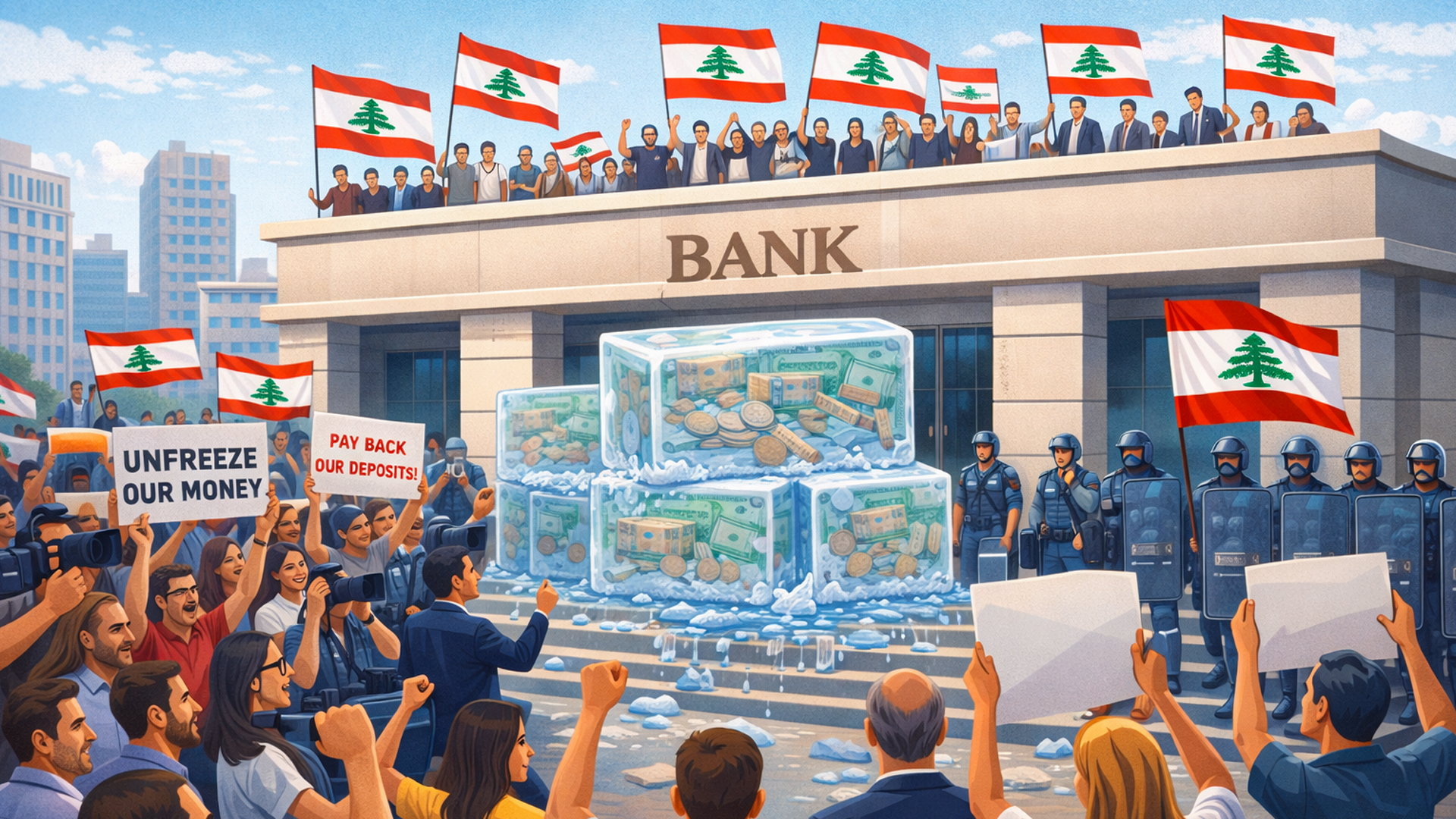
Six years after Lebanon’s financial system collapsed and locked millions of citizens out of their savings, the cabinet has taken ”
“its most concrete step yet toward a settlement. Ministers have approved a draft ‘financial gap’ law that lays out how tens of ”
“billions of dollars in losses will be shared between the state, the central bank, commercial banks and depositors, and how ”
“frozen accounts are meant to be repaid over time.
The bill, which passed by a narrow cabinet vote, still needs to clear Parliament. But it already marks a political turning point. ”
“For the first time since the 2019 crash, there is an official framework that recognizes the scale of the losses in the banking ”
“sector and attempts to decide who pays for them and on what schedule.
From frozen accounts to a formal ‘gap’
When Lebanon’s long running debt and currency crisis erupted in 2019, banks shut their doors to dollar withdrawals, imposed ”
“arbitrary capital controls and effectively trapped depositors inside a system that no longer functioned. The World Bank later ”
“described the collapse as one of the worst financial crises globally since the nineteenth century.
The new draft law starts from a simple but politically explosive premise: there is a huge financial gap between what banks and ”
“the state owe on paper and the assets actually available to repay those obligations. Rather than pretending that all deposits ”
“are fully guaranteed, the bill tries to codify how that gap will be closed and who will absorb the losses.
Who pays what under the draft
According to officials backing the bill, smaller depositors would be protected first. Accounts under a defined threshold would ”
“be repaid in cash and local currency over a period of several years, giving households and small businesses a path to recover at ”
“least part of what they lost.
Larger accounts would face a different treatment. Sums above the protected ceiling would be returned more slowly, partly through ”
“securities issued by the central bank and backed by its assets, including gold and state holdings. The state itself, commercial ”
“banks and the monetary authority would all be required to take losses as well, in the form of writedowns and restructuring.
Prime Minister Nawaf Salam has framed the law as an attempt to balance fairness with realism: protecting the majority of ”
“depositors while acknowledging that the system simply does not have enough clean assets left to make everyone whole at the same ”
“time.
A contested step toward IMF backed reforms
The financial gap law is also designed to unlock talks with the International Monetary Fund. The IMF has long said that Lebanon ”
“needs a transparent and credible plan for bank restructuring, loss recognition and capital controls before any serious rescue ”
“program can move forward.
Supporters of the bill argue that it finally gives Lebanon something concrete to present to international partners: a roadmap ”
“for sharing losses, auditing state and central bank assets and starting to rebuild confidence in the banking system. They see it ”
“as a precondition for attracting fresh investment and Gulf support.
Critics, however, say the law is being rushed through without enough consultation with depositors, independent experts or civil ”
“society. Some fear that it could lock in losses for ordinary savers while letting politically connected debtors and bank ”
“shareholders escape accountability. Banking lobbies have warned that forcing them to take heavy losses could wipe out what remains ”
“of the sector.
What it means for depositors
For people whose life savings have been trapped for years, the financial gap law is both a sign of progress and a source of ”
“anxiety. On one hand, it is the first major attempt to put numbers, timelines and responsibilities in writing. On the other, it ”
“confirms what many already suspected: there is not enough money to simply open the vaults and pay everyone back at once.
If Parliament passes the bill with only minor changes, smaller depositors could finally see a clear schedule for reimbursement, ”
“even if it stretches over several years. Large account holders will face harder choices about how much of their wealth they are ”
“willing to lock into long term securities issued by a state that still struggles with debt and governance.
For Nowleb readers, the key is to understand that this draft is not the end of Lebanon’s financial crisis, but the beginning of a ”
“negotiated settlement. The debate now shifts to Parliament and to the street, where depositors, bankers and political forces will ”
“fight over the final shape of a law that could define who carries the cost of the collapse for a generation.
Leave a Reply