

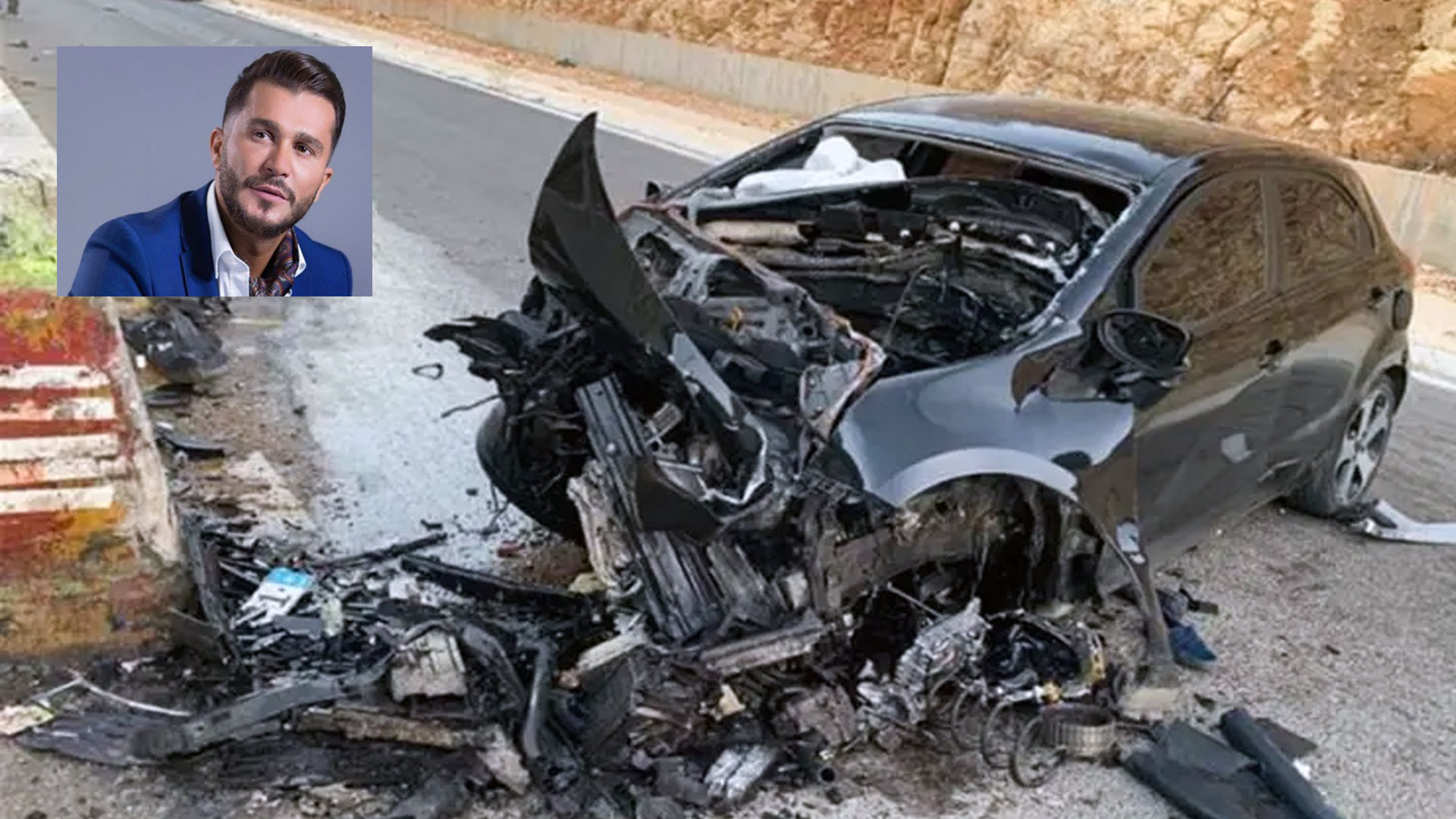
On August 27, 2022, Lebanese pop singer George Al Rassi finished a concert in Damascus and began the familiar drive home toward Lebanon. Somewhere on the international highway near the Masnaa border crossing, his car slammed into a concrete barrier. By the time civil defence teams arrived, the 42-year-old artist and a woman travelling with him were both dead.
The news travelled quickly—from local alerts to regional headlines and social media tributes. For many fans, it felt unreal: a voice they had grown up with, gone in a moment on a stretch of road they knew by heart.
From Teenager in Kaslik to Regional Stages
Born on January 29, 1980, in Cheikh Taba in Lebanon’s Akkar district, George Al Rassi was part of an artistic family. His father, Khalil, played the oud; his sisters Nadine and Sandrine built their own careers as actresses and singers. Music was not a side hobby; it was the atmosphere at home.
At 16, he signed his first performance contract: a six-month engagement at Options, an international nightclub in Kaslik. Night after night, he sang to mixed crowds of locals and visitors, learning how to hold a room and refine a stage persona. That residency gave him visibility and led to his early recordings.
Through the late 1990s and 2000s, Al Rassi released albums and singles that circulated widely on Lebanese radio and Arab satellite channels. Songs such as Sahr al Layl, Hikaya, Wala Yomken and later tracks like Albi Mat positioned him firmly within the landscape of Arabic pop—romantic, melodic and tailored to a generation that grew up with pan-Arab music TV.
A Career Built on a Direct Connection With Fans
Unlike some artists who rely heavily on media mystique, Al Rassi’s image was built on approachability. He performed in festivals, weddings, clubs and televised concerts, appearing in gossip segments but also in more intimate TV interviews about family and daily life.
He often spoke publicly about his relationship with his son Joe, describing fatherhood as the most important part of his life. Photos of the two together became a staple of fan pages, reinforcing a profile of a working musician who saw success not as distance from his audience, but as a tighter bond with them.
The Last Night: A Concert, a Drive, a Barrier
In the hours before his death, George Al Rassi was doing what he had done hundreds of times: performing for an audience outside Lebanon. According to Gulf News and local media, he had just finished a show in Damascus and was heading back towards Beirut when the crash occurred near the Lebanese side of the border.
Initial reports, citing security sources, mentioned the possibility that he might have fallen asleep at the wheel. What is not in dispute is the violence of the impact. Civil defence teams used hydraulic rescue equipment to extract both bodies from the heavily damaged car, before transferring them to a nearby government hospital.
As further coverage emerged, it became clear that the vehicle had collided with a concrete median barrier on the highway—a feature that, as later reporting highlighted, lacked modern crash cushioning and had been involved in previous fatal accidents. In death, the singer’s name was tied not only to his songs, but to a piece of infrastructure that suddenly everyone in Lebanon seemed to recognise.
Shock, Grief and Anger
The response to Al Rassi’s death mixed mourning with indignation. Fans and colleagues shared clips of his performances, behind-the-scenes moments and interviews. At the same time, images of the crash scene circulated alongside questions: Why was such a dangerous barrier left unprotected? How many warnings had already been ignored?
His sister Nadine spoke bluntly about institutional responsibility, echoing a sentiment that many Lebanese feel across sectors: that infrastructure failures are not “accidents” in the pure sense, but the foreseeable result of neglect and fragmented governance.
At his funeral, televised across the country, the line between personal and public grief blurred. For his family, it was the loss of a son, a brother, a father. For his fans, it was the end of a voice linked to specific years, relationships and memories. For activists, it became a symbol of a broader pattern in which citizens pay with their lives for the state’s failures.
A Legacy Beyond the Crash
It would be easy for George Al Rassi’s story to be reduced to a headline about a “tragic accident.” That would miss the larger picture. He was part of a wave of Lebanese and Arab pop singers who defined the sound of satellite-TV adolescence; a working musician who never fully left the circuit of clubs and festivals; and a public figure whose death has now forced a new reckoning with how dangerous Lebanon’s roads can be.
For Nowleb readers, his life sits at the intersection of culture and infrastructure. On one side, the songs, performances and television appearances that built his career; on the other, the physical and political environment that shaped his final journey home.
Some tributes will remember him primarily for particular tracks or performances. Others will remember the photos of twisted metal at Masnaa. Perhaps the most honest way to hold his memory is to keep both in view: the artist who connected with thousands, and the citizen whose death has become an indictment of how little protection those thousands are offered when they step onto the road.
Leave a Reply