

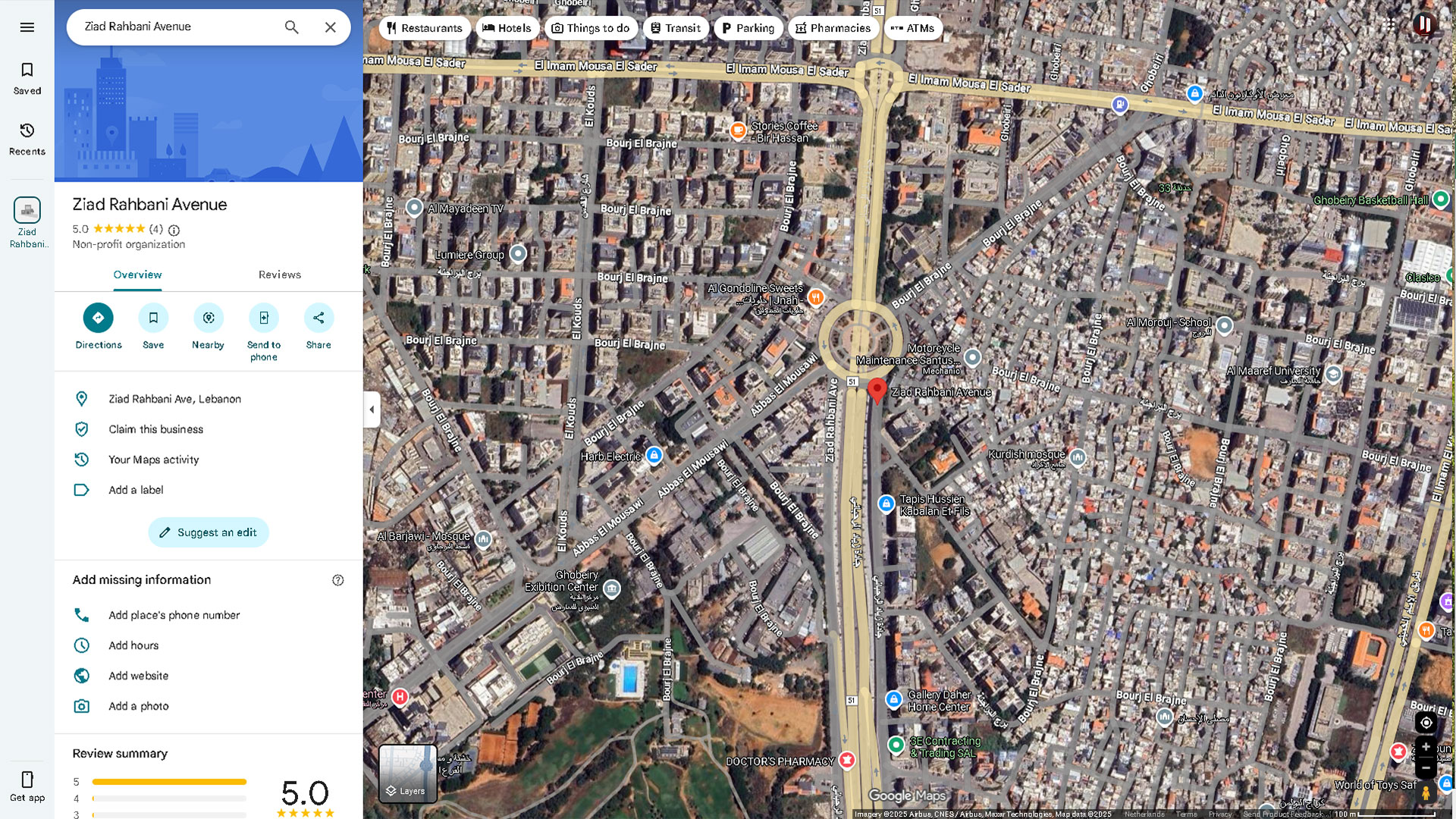
Lebanon’s Cabinet has approved a decision to rename Hafez al-Assad Avenue, the road leading from Beirut toward the airport, after the late composer, playwright and political satirist Ziad Rahbani. The move comes just days after Rahbani’s death at 69, and signals how firmly the once-controversial artist has been folded into the country’s official cultural canon.
The avenue, named decades ago for Syria’s former president, has long been read as a symbol of Damascus’ heavy influence over Lebanese affairs during and after the civil war. Replacing that name with Rahbani’s — a man who spent his career dissecting power, sectarianism and foreign meddling on stage — is a gesture loaded with irony as well as nostalgia. It effectively trades an emblem of political tutelage for one of artistic resistance.
Rahbani, the son of legendary singer Fairuz and composer Assi Rahbani, became famous for plays and songs that addressed class inequality, civil conflict and corruption with biting humour and jazz-infused music. For many Lebanese, especially those who came of age during the civil war and its aftermath, his work provided a shared language for anger and disillusionment — one that resurfaced during the 2019 protest movement and again in the days following his death.
The Cabinet’s decision follows other honours, including the National Order of the Cedar, awarded posthumously. Critics note that the state spent decades ignoring or even sidelining Rahbani’s more radical positions, only to embrace him fully once he was gone. Supporters counter that the symbolic rebranding is overdue recognition of an artist who captured the complexities of Lebanese life more accurately than many official histories.
Whatever the political readings, the new street name ensures that generations of travellers will encounter Rahbani’s legacy the moment they leave or enter Beirut. For a man who turned the city’s contradictions into unforgettable music and theatre, becoming part of its everyday geography may be the most fitting tribute of all.
Leave a Reply