

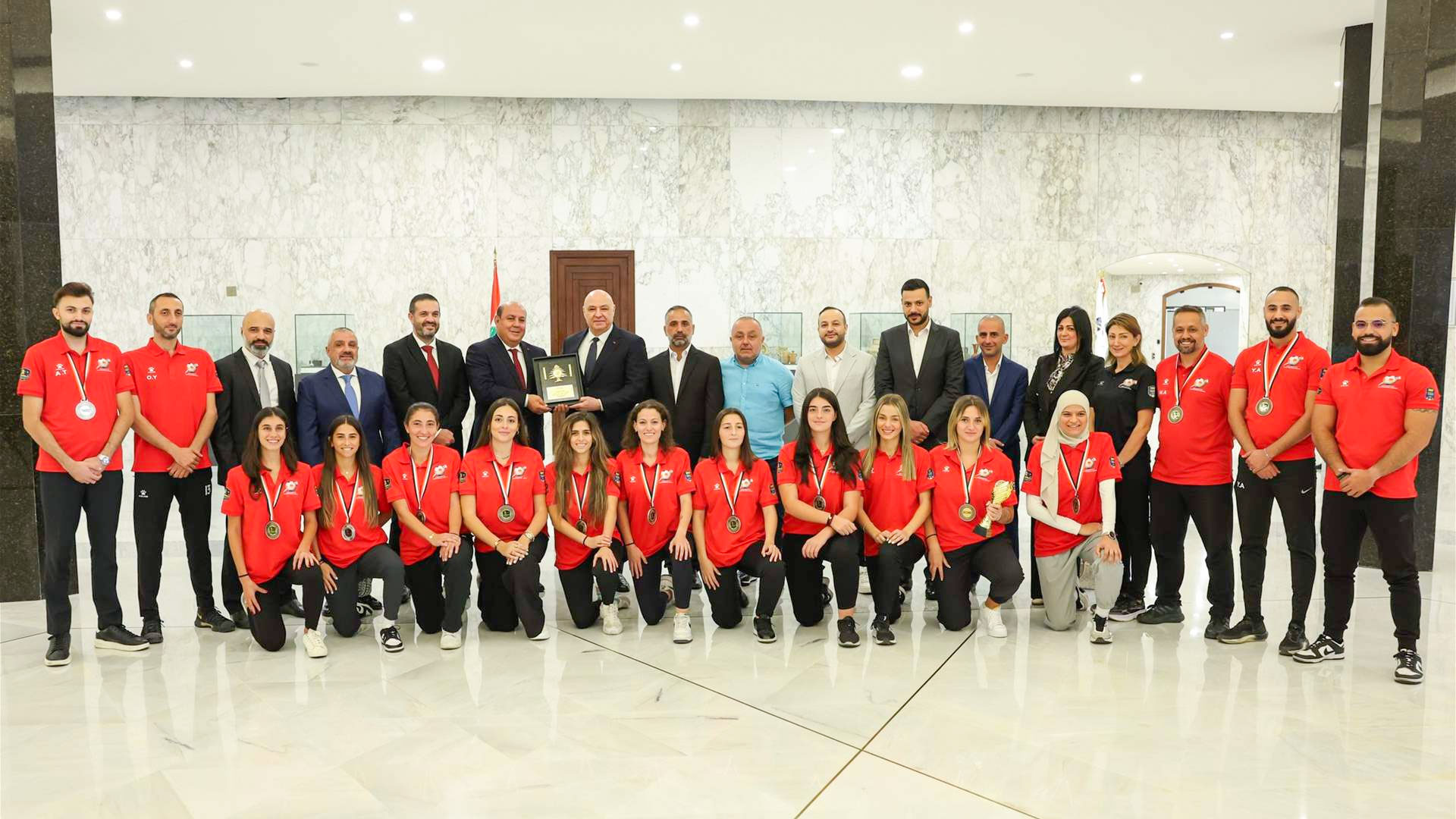
President Joseph Aoun has honored Lebanon’s women’s mini-football team after their historic bronze medal at the Women’s Mini-football World Cup in Erbil, describing the achievement as an ""honourable accomplishment"" that raises Lebanon’s name high on the international stage.
The players, coaches and officials were received at Baabda Palace, where the president praised their spirit, discipline and ability to perform under pressure, turning a breakthrough run at a growing global tournament into a moment of national pride for Lebanese sport.
Baabda Reception After a Historic Podium Finish
The women’s national mini-football team reached the podium at the World Cup held in Erbil, in the Kurdistan Region of Iraq, securing third place after a series of intense matches against some of the strongest sides in the discipline. Their bronze medal marks one of the most prominent international results yet for a Lebanese women’s team in any format of football.
At Baabda, President Aoun congratulated the players one by one, highlighting not only the result but the message behind it: that Lebanese women are capable of competing, winning and representing the country with confidence and professionalism on global pitches.
He underlined that their campaign showed ""determination, commitment and resilience,"" stressing that their performance offers a powerful example to young girls across Lebanon who dream of playing sport at a high level despite economic, social and infrastructure challenges.
A Team That Refused to Back Down
Throughout the tournament in Erbil, Lebanon’s women’s mini-football squad built a reputation for organisation and character rather than star power. Their World Cup run included key wins in the group stage and knockout rounds, often decided by small tactical details and late goals.
Coaches and federation officials have repeatedly emphasised three core qualities that defined the campaign:
- Collective defending: High work rate off the ball and disciplined pressing in the smaller-sided mini-football format.
- Quick transitions: Fast breaks and sharp combinations that punished opponents when they left space.
- Mental toughness: Staying calm in tight scorelines, particularly in games decided by narrow margins.
Those traits resonated with fans back home, where social media timelines filled with clips of goals, celebrations and behind-the-scenes footage from the locker room. For many followers of Lebanese women’s sport, the bronze medal felt like a continuation of a broader story: national teams quietly climbing the ranks in regional and international competitions.
A Symbol for Women’s Sport and a Growing Game
President Aoun used the Baabda meeting to link the team’s success to the wider development of women’s sport in Lebanon. He stressed that the players had helped ""raise Lebanon’s name"" and that their achievement should be met with more support for girls’ football programmes, better facilities and stronger backing from both public and private sectors.
Mini-football itself is also on the rise. The president recently welcomed a delegation from the International Mini-football Federation (IMF), led by its president Dr. Mohammed Al-Dosari, to discuss Lebanon’s potential role as a regional hub for future events. During that meeting, the women’s bronze medal was cited as one of the standout milestones of the past year.
By placing the women’s team at the centre of a presidential ceremony, Lebanon sent a clear message: success in smaller-sided formats and emerging competitions is no less valuable than traditional eleven-a-side football when it comes to building reputation, inspiring youth and shaping the country’s sporting identity.
From Erbil to Baabda: Recognition and Gratitude
During the ceremony, the team presented President Aoun with a commemorative shield on behalf of the federation, a gesture of thanks for the official recognition and for the presidency’s willingness to host the players after their World Cup run.
For many of the footballers, the visit to Baabda was as memorable as the matches themselves. Photos released from the palace showed players in their team tracksuits standing alongside the president, holding the shield and posing with the national flag—a contrast to the sweat-soaked jerseys and high-intensity action of Erbil, but just as meaningful.
Coaches and staff highlighted how rare it still is for women’s teams to receive this level of institutional spotlight, calling the reception a ""step towards normalising"" the idea that female athletes deserve the same visibility and respect as their male counterparts when they succeed abroad.
What This Bronze Could Mean for the Future
While a single medal cannot transform an entire system, the women’s mini-football team’s bronze offers several tangible opportunities:
- Inspiration at grassroots level: Clubs and schools can use the team’s story to encourage more girls to join academies and local mini-football leagues.
- Leverage for investment: The podium finish strengthens the case for sponsors and municipalities to support facilities, tournaments and youth programmes dedicated to girls.
- Momentum for hosting events: As Lebanon explores the idea of staging international mini-football tournaments, having a successful women’s team gives the country a stronger narrative to present to partners and fans.
For Nowleb readers, the story is about more than a medal or a photo-op. It reflects a shift in how Lebanese sports institutions view women’s achievements: not as side notes, but as central chapters in the national sports story.
As the squad returns to training, attention will turn to what comes next—regional championships, future World Cups and, perhaps, home tournaments played in front of local crowds. If the reception at Baabda is any indication, the team will not be walking that path alone.
Leave a Reply