

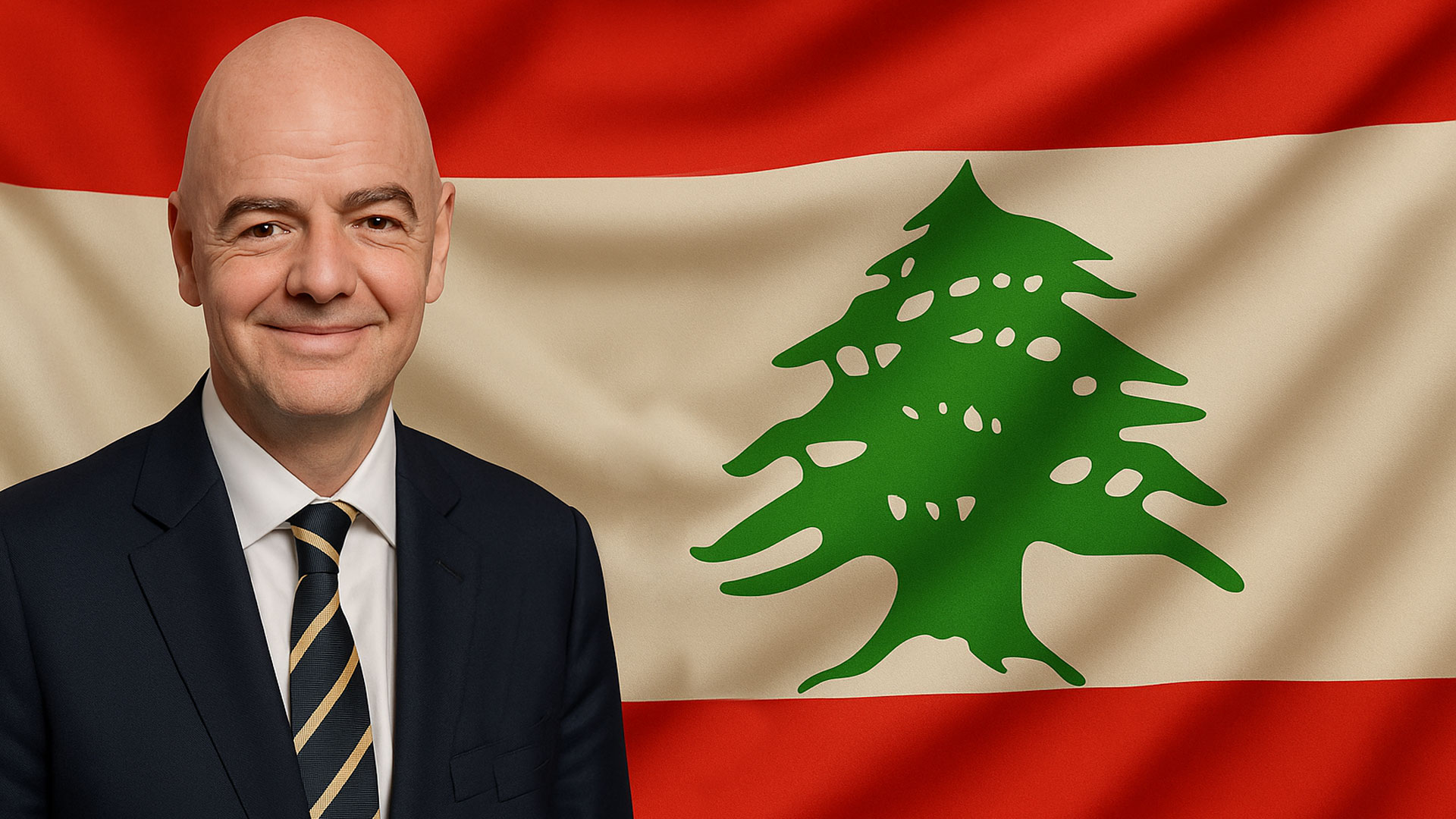
Lebanon grants citizenship to FIFA chief Gianni Infantino in a decision that football officials describe as a symbolic thank-you for his role in promoting the game, but which has quickly turned into a flashpoint in the country’s long-running battle over citizenship and equal rights.
The announcement came after a meeting at Baabda Presidential Palace on 25 November 2025, where President Joseph Aoun received Infantino and officials from the Lebanese Football Association (LFA). According to the LFA, the president decided to grant the FIFA chief Lebanese nationality in recognition of his “continued support for Lebanese football.” Infantino later confirmed the news in media comments, saying he felt “proud” and that he had “been Lebanese for many years already” through his personal ties.
Did Lebanon grant Infantino citizenship
For Lebanese football authorities, the move is framed as part of a broader relationship with FIFA. Infantino, 55, already holds Swiss and Italian citizenship and is married to Leena (Lina) Al Ashkar, a Lebanese national who previously worked with the LFA. During his visit, he discussed further support for Lebanese football infrastructure and repeated his ambition for Lebanon to have a modern, FIFA-standard national stadium.
The LFA statement emphasised that the citizenship grant is “symbolic”, intended to signal Lebanon’s appreciation for Infantino’s backing at a time when the country’s sporting infrastructure and clubs are struggling under the weight of economic collapse. In that narrative, naturalising the FIFA president is seen as a gesture of friendship and a way to anchor Lebanon more firmly inside world football’s network.
From a purely sporting perspective, some stakeholders view the decision as an investment in political capital with Zurich: strengthening personal ties with the man who oversees global competitions, funding streams, and development programmes.
A rare and powerful presidential tool
Under Lebanese nationality law, citizenship can be obtained by birth, via the father, or by presidential decree in exceptional cases. The latter is a powerful tool that has frequently been controversial. Past naturalisation decrees have sparked accusations of demographic engineering, clientelism, and lack of transparency.
Granting a high-profile foreign figure Lebanese citizenship is rare but not unprecedented. In Infantino’s case, the decision was presented as a recognition of his services to Lebanon and his personal connection to the country through his Lebanese spouse. The LFA noted that President Aoun had informed Infantino of the decree and asked him to complete the necessary paperwork to finalise the process.
Infantino’s own biography now officially includes a third nationality: Swiss, Italian, and Lebanese. In interviews, he has spoken about feeling at home in Lebanon and in the wider region, and has frequently referenced his marriage to a Lebanese woman as part of his personal story.
Citizenship for a FIFA president – but not for Lebanese mothers’ children
The celebratory framing from football officials contrasts sharply with the reactions of many Lebanese citizens, especially activists who have campaigned for years to reform the country’s gender-discriminatory citizenship laws.
Under current legislation, a Lebanese woman cannot pass her nationality to her children or a foreign husband, whereas a Lebanese man automatically passes citizenship to his children and can facilitate it for a foreign wife. This legal imbalance has left tens of thousands of families in limbo, with children of Lebanese mothers treated as foreigners in their own country.
Against that backdrop, the decision to fast-track citizenship for the FIFA president – a wealthy, powerful foreign man already holding two nationalities – struck many as a painful contrast. Social media quickly filled with comments questioning why a global official can be granted Lebanese nationality in days, while Lebanese mothers have been unable to secure it for their children after decades of lobbying, court cases, and public campaigns.
Rights groups argue that the Infantino case underlines how citizenship in Lebanon can still be used as a political gift, while structural discrimination against women remains untouched. For them, the issue is not whether the FIFA chief “deserves” citizenship, but whether the same system refuses to recognise basic rights for Lebanese women and their families.
Football diplomacy and the promise of a new stadium
Infantino’s visit to Beirut was not just about a passport. In the same media appearances where he confirmed the citizenship decision, he reiterated FIFA’s intention to help Lebanon build a new national football stadium that meets international standards, with a proposed capacity of 20,000–30,000 spectators.
This pledge builds on earlier FIFA Forward investments that funded upgrades to several Lebanese stadiums and training facilities. For clubs and players, the prospect of a modern, fully supported national arena is a major boost – a visible sign that football has not been forgotten amid the country’s broader crises.
Critics, however, question whether such pledges should be politically connected to the granting of citizenship, and whether football diplomacy is being used to soften scrutiny of domestic policies on rights and governance. Supporters respond that Lebanon cannot afford to turn away high-level backing for its sports sector, especially when it comes with infrastructure that could benefit generations of young players.
A mirror to Lebanon’s broader citizenship debate
In many ways, the story of Lebanon granting citizenship to FIFA chief Gianni Infantino is about much more than one man or one sport. It touches on:
- How nationality is granted: through opaque presidential decrees or clear, transparent criteria.
- Who is seen as “worthy” of citizenship: influential foreigners and investors, or long-resident families and children of Lebanese mothers?
- What values citizenship represents: gratitude, demographic strategy, economic opportunity, or equal belonging.
For supporters, naturalising Infantino is a soft-power gesture that could help Lebanon leverage global football networks, attract investment, and secure a much-needed national stadium. For critics, it is another example of power being used to reward the already powerful while ordinary Lebanese continue to struggle for basic legal recognition.
As the debate continues, one thing is clear: the decision has ensured that a story which might have been a simple piece of football news has instead become a sharp lens on Lebanon’s unresolved citizenship questions — and on how sport, law, and politics intersect in a country still searching for a more inclusive future.
Leave a Reply