

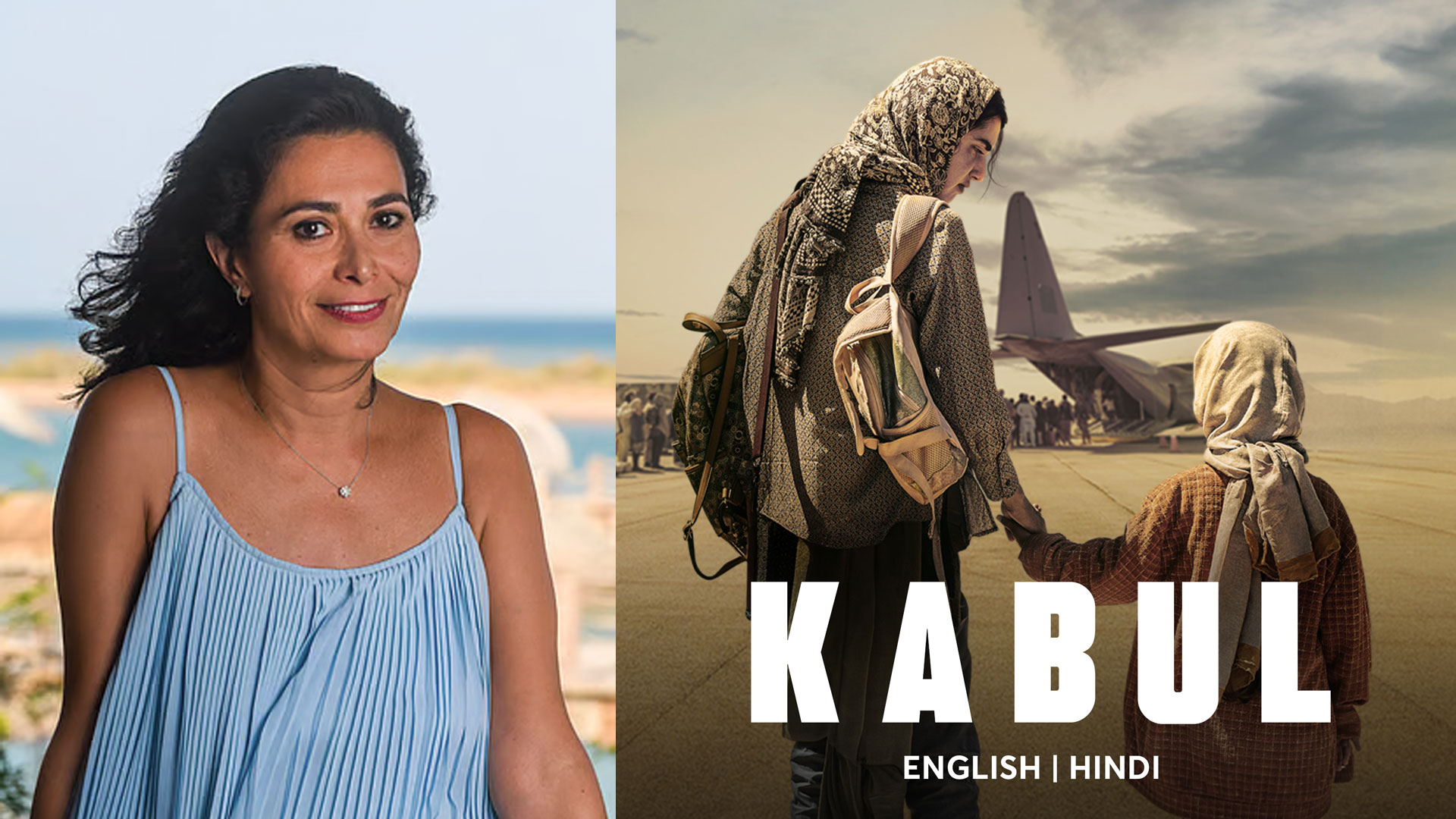
“I was raised between chaos and culture,” Darina Al Joundi says, summing up a life that has moved between war, exile and artistic risk. The Lebanese actor, writer and performer grew up in a family steeped in media and ideas, yet surrounded by the instability that marked Beirut’s modern history. That tension — between refinement and rupture — still shapes the way she works today.
Al Joundi belongs to a generation that came of age during conflict but refused to be defined only by it. She has built a body of work that stretches across theatre, television, cinema and literature, moving fluently between Arabic, French and other languages. For her, each medium is a different way of asking the same questions about identity, freedom and how to stay human in an unstable world.
In recent years, she has reached new audiences through the series Kabul, where she learned Dari for the role, and through her short film Original Sin, which premiered at the London Film Festival. Both projects underline her willingness to step outside familiar contexts — geographically, linguistically and emotionally — in search of characters that feel true rather than safe.
Al Joundi often draws on personal experience, but she resists the idea that acting is therapy. Instead, she describes her process as a kind of disciplined improvisation: using emotions, memories and lived experience as raw material while always keeping a clear sense of self. What others might call “healing”, she calls the privilege of transforming life — including its pain — into work that speaks to strangers in dark rooms.
Theatre remains her deepest artistic home. Unlike television and film, where schedules compress character work, the stage gives her time to build roles slowly, layer by layer. At the same time, she continues to write, direct and appear on screen, refusing to be boxed into a single format. For Al Joundi, creativity is an ecosystem: each medium feeds the others, and stepping away from one would weaken them all.
Exile and belonging run through her work. After a life of constant movement, she now speaks of “carrying home within myself” — a portable sense of centre rather than a fixed place on the map. That inner home is also where she locates freedom, at a moment when she feels that the public space for free expression is shrinking worldwide. On stage or on the page, she says, is where she can still be fully herself.
More than anything, Al Joundi wants audiences to leave her performances with questions rather than answers: about what they believe, how they live and what they are willing to tolerate. In a region where art is often asked to reassure, her work continues to do the opposite — to unsettle, to challenge and to remind viewers that freedom begins with the courage to doubt.
Leave a Reply