

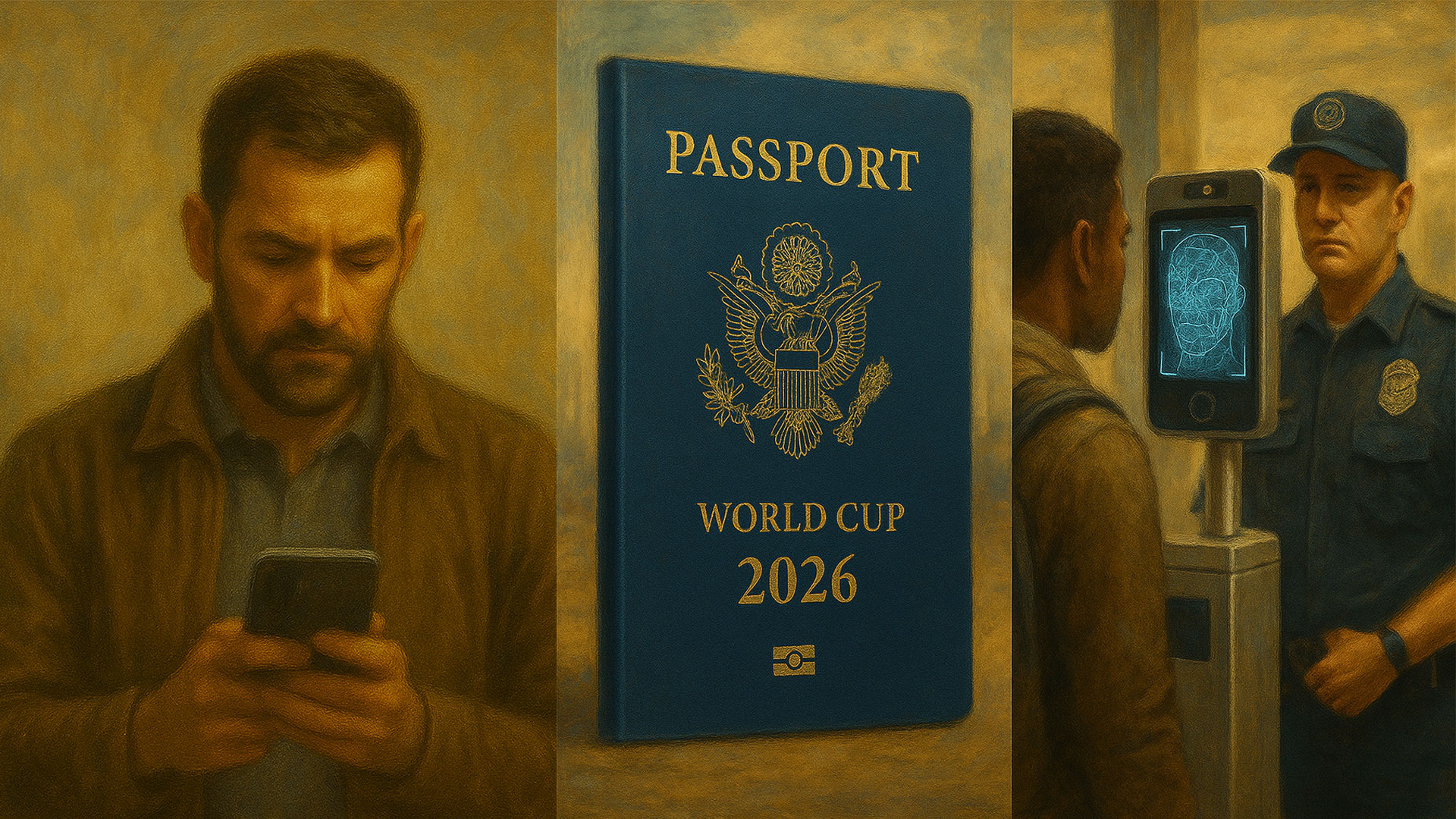
For millions of football fans planning to travel to the United States for the 2026 FIFA World Cup, the journey could soon begin long before they reach an airport. A new U.S. policy proposal would require many international visitors to undergo social media checks and expanded biometric screening as part of a pre-travel vetting programme.:contentReference[oaicite:5]{index=5}
According to reporting by Forbes, travellers from dozens of mainly visa-waiver countries – including the UK, France, Spain, Germany, Japan and South Korea – could be asked to provide additional personal data and social media identifiers when applying for permission to enter the U.S. during the tournament.:contentReference[oaicite:6]{index=6}
From electronic forms to deep digital checks
The proposal would expand existing systems like the Electronic System for Travel Authorization (ESTA) into something closer to a full digital background check. In addition to basic biographical data and passport details, visitors could be required to share social media handles and consent to facial recognition and other biometric tools being used to verify identity and screen for perceived security risks.:contentReference[oaicite:7]{index=7}
Supporters of the plan argue that such screening is necessary for an event expected to draw hundreds of thousands of visitors to multiple U.S. host cities. They say advanced data-driven vetting can help authorities identify potential threats before they ever board a plane.
Privacy advocates warn of ‘digital border’ creep
Privacy experts and civil-liberties groups see something different: another step toward normalising mass data collection at the border. They warn that asking travellers to surrender years of online activity – posts, photos, networks – risks turning social media into a de facto security file, with little transparency about how data are analysed, stored or shared with other agencies.
There are also concerns about discrimination and error. Automated systems trained on incomplete or biased datasets can misclassify ordinary political speech or satire as security red flags, while language nuances and local context are easily lost in automated scanning.
Football, politics and the fan experience
The 2026 World Cup, co-hosted by the U.S., Canada and Mexico, has been marketed as a celebration of global football and open borders. But as screening requirements tighten, fans and travel operators must treat data-sharing as part of the ticket price. Travel advisers are already recommending that visitors carefully review what they have made public online and allow extra time for authorisations to be processed.
For Lebanese and regional fans planning to attend matches in North America, the message is clear: expect more digital paperwork, more detailed questions and less anonymity. The World Cup will still be a party – but it will also be a test case for how far governments can extend their reach into travellers’ online lives.
Leave a Reply